Born in 1894, Audrey Chirnside was the daughter of George Chirnside and granddaughter of Andrew Chirnside, co-founder of the Victorian wool dynasty.
While she stood to inherit vast holdings, such as the 1,000-acre Mooroolbark Park (modern-day Chirnside Park), Audrey was never content to be a mere spectator.
Her life was defined by a restless energy that carried her from greyhound coursing tracks to the mud-choked roads of the Western Front.
A Sporting Pedigree
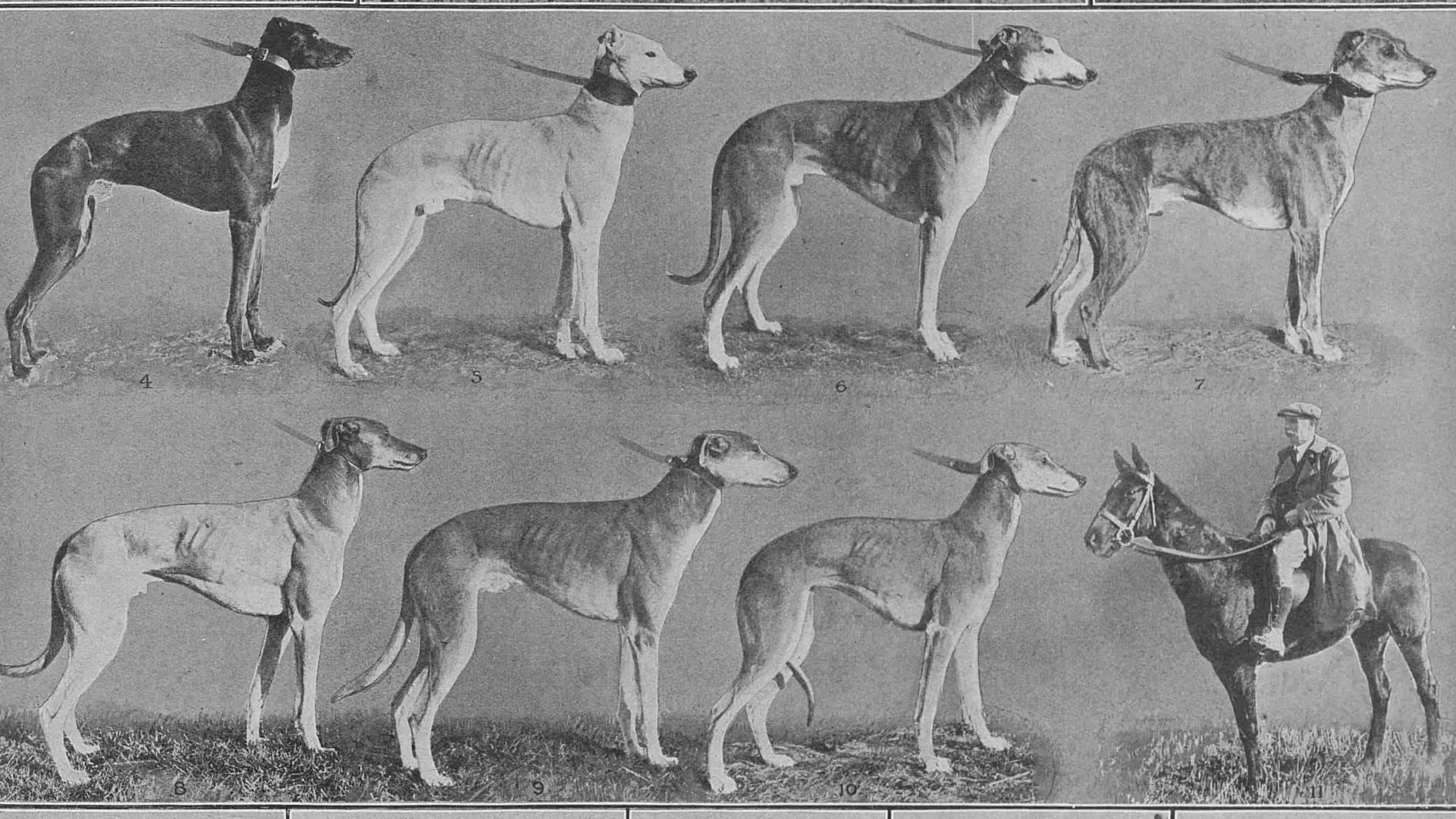
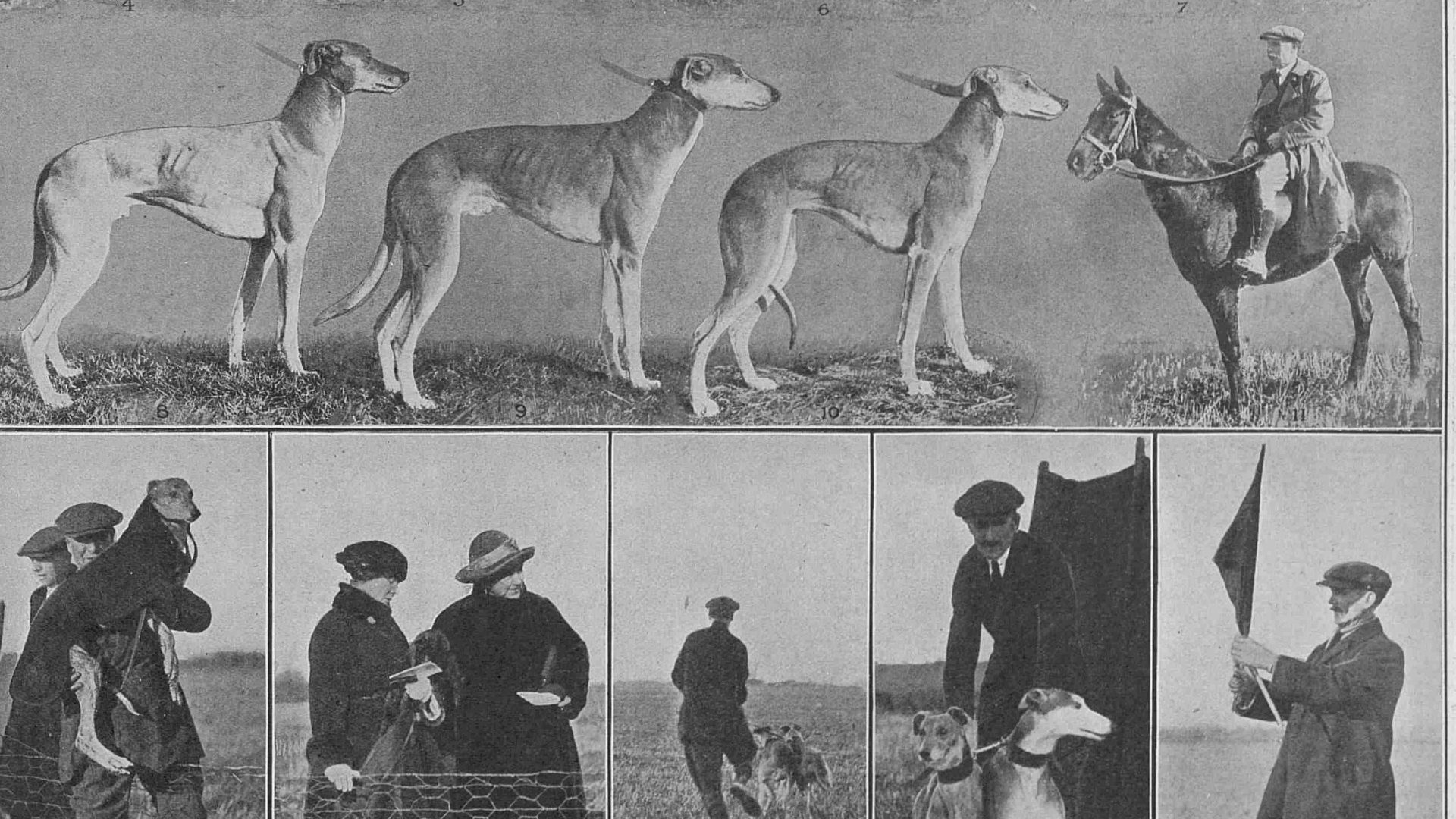
In the 1910s, Audrey stepped out of her family’s shadow to establish her own greyhound kennel behind the family’s Werribee mansion.
She was no casual hobbyist; as a formidable trainer, she refined local bloodlines with strategic British imports.
Her success was immediate: in 1913, Captain Wood (Full Captain – Goodwood Lass) claimed the Victoria Cup after winning the Derby [1].
She followed this with a near-miss at the 1919 Waterloo Cup with Abbey Chimes (Comedy King – Fallacy II), declared runner-up.
Audrey’s personal stamp on the sport was literal; she used her own initials to name her greyhounds, creating a legacy of “A.C.” monikers.
As the Great War took hold, these initials began to reflect a deepening ANZAC spirit. Her coursing dogs included Australian Cadet (King Comedy – Hillcaught Lioness), Anzac Countess, and All Colonial.
Even her greyhound, Another Cocktail (Husky Whisky ll – Juliobriga), served as a reminder of her sharp wit amid the looming shadows of World War.
From Socialite to Specialist Driver
By 1914, Audrey was a staple of high society. She possessed a “social cache” that spanned hemispheres, being presented “At Court” to the British Royal Family and attending Melbourne’s Government House during Cup Week.
However, another passion lay under the hood of a car. Her father had assembled a world-class collection of early automobiles.
Behind the wheel of these “great” cars—including a Rolls-Royce—Audrey mastered the driving skills that would soon save lives.
In January 1914, Audrey and her mother Annie departed for Egypt [2]. This was the first of several visits where Audrey’s uncle, Captain John Percy Chirnside, and her cousin Gordon were serving with the Remount Section and the AIF.
Gordon famously brought his personal Rolls-Royce to the desert, proving its engineering superior to standard military vehicles—a feat of family daring that clearly inspired Audrey’s own transition from socialite to military service.
The Western Front: Service Under Fire
Audrey soon traded luxury for the grit of the Women’s Volunteer Defence Corps.
Her transition to the front lines was extraordinary: after reviewing her impressive reports, Lord Kitchener personally authorised her to serve [3]. At just 20 years old, she was the only woman under 21—outside the nursing profession—granted such prestigious permission.
Operating her own vehicle and wearing a custom uniform, Audrey served as a volunteer ambulance driver across Belgium and France.
She navigated treacherous terrain to ferry wounded soldiers from the battlefield to aid stations, even enduring aerial bombardments in Paris [3].
Her pioneering efforts resonated back home; in 1915, Punch magazine highlighted her service, noting that while women “can’t fight… they can drive cars,” predicting the rise of a dedicated woman’s automobile corps [4].
Service, Greyhounds, and Marriage
By 1916, Audrey was based in London with the Australian Red Cross. Even amidst the chaos of war, her devotion to greyhounds remained constant.
She acquired a pair of dogs—including the English Waterloo Cup runner Mariot (Vedas – Badoura)—whose trainer had entrusted them to her due to the pressures of his own military enlistment [5].
As the war neared its end, Audrey’s personal life took a significant turn. On July 25, 1918, she married Major Harold Pape of the Tank Corps at Christ Church, Mayfair.
The Weekly Times noted that while she was a fixture of society, she was always “more enamoured of outdoor life and athletic sports than the ordinary social round” [6].
A Legacy in Two Hemispheres
Marriage did not slow her “life’s course.” In 1918, she welcomed Anzac Countess and her littermates, the result of a mating between the dual Victorian Waterloo Cup winner Brown Hawk and Audrey’s imported Hillcaught Lioness.
By 1920, she returned to international coursing, taking two Australian-bred dogs to England: Boy Ben (Benediction-Gipsy Love) and All Colonial.
The former proved to be the fastest dog in the 1920 English Waterloo Cup [7].
Her commitment to service reached its peak during the Second World War.
Audrey returned to the British military as a Chief Commander (Temporary) within the Auxiliary Territorial Service (ATS), bringing a wealth of experience to a world in crisis.
After a daring and distinguished career spanning two world wars, it was neither a lack of will nor a loss of capability that ended her tenure, but the cold finality of age restrictions [8].
For a woman who had spent a lifetime shattering glass ceilings, it was perhaps only the weight of bureaucracy that could finally force her to step back.
From her own “A.C.” initials on a greyhound coursing program to the decorated uniform of a high-ranking officer, Audrey Chirnside’s legacy remains a singular blend of sporting excellence and ANZAC grit.
Lest we forget.
Citations & references:
- [1] The Age (5 July 1913) Page 17
- [2] The Age (21 January 1914). “Social Notes: Governor General Entertains.”
- [3] The Werribee Shire Banner (19 November 1914). “A Werribee Girl at the Front:
Miss Audrey Chirnside’s Achievement.”
- [4] Punch Magazine (21 January 1915). “Sydney Social.
- [5] Punch Magazine (17 August 1916). “Letters from London: Correspondence of Audrey Chirnside (29 June 1916).”
- [6] The Weekly Times (28 September 1918). “Victorian Heiress Married: Major Harold Pape and Miss Audrey Chirnside.”
- [7] The Register Adelaide (15 April 1921) Page 9
- [8] Supplement to The London Gazette, 12 September 1944, page 4211
Punch Magazine (25 November 1915). “Fact and Rumour; Sydney Mail (23 February 1916). “With The Australian Troops in Egypt.”